
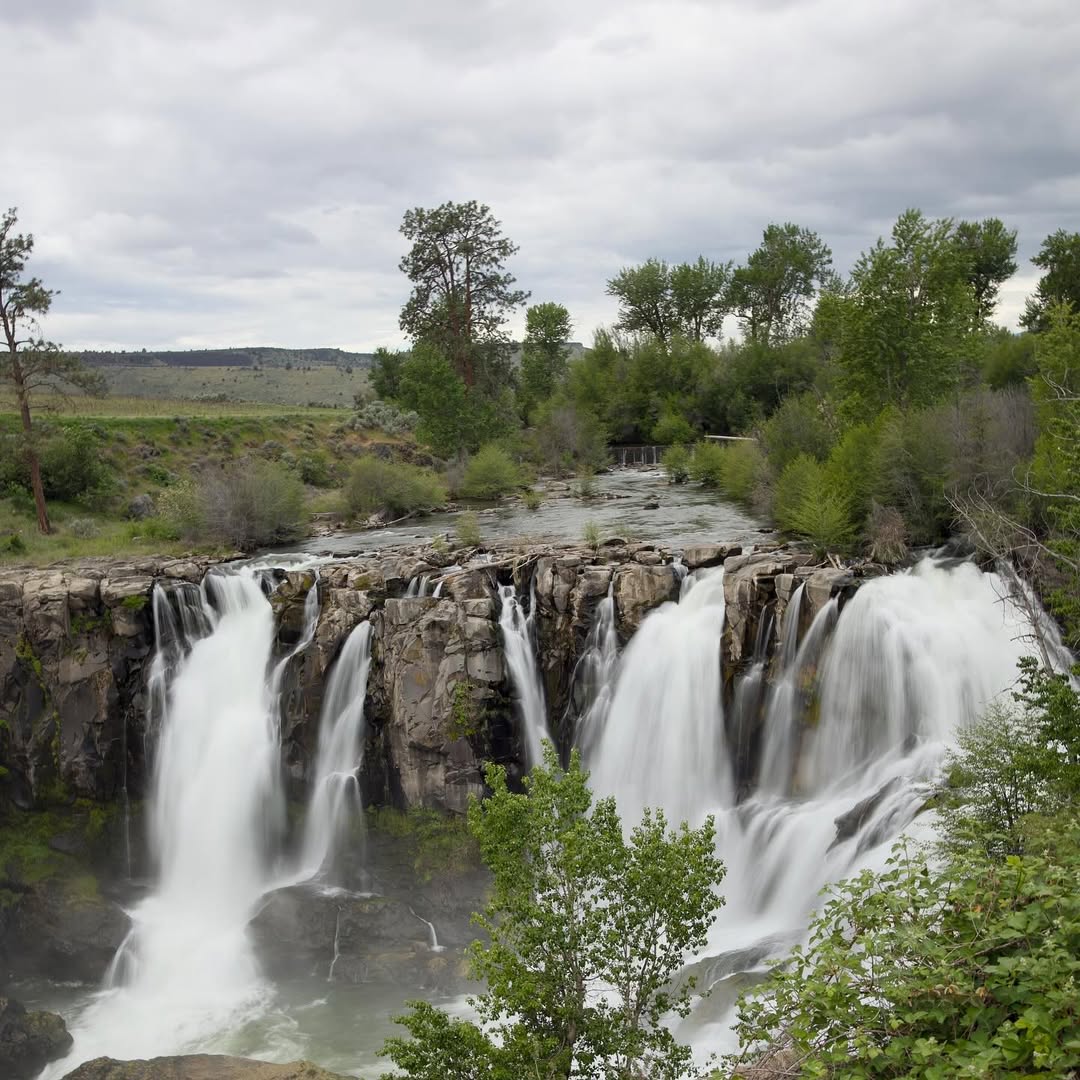
Shoshone Falls is one of those places that surprises people who thought they knew what to expect. You drive through Twin Falls, Idaho — not a destination that announces itself as spectacular — and then you get to the canyon rim and the Snake River is down there, running through a basalt gorge, and Shoshone Falls is dropping 212 feet across a 900-foot-wide curtain of water into the canyon below. It's wider than Niagara Falls. The scale of it, in the middle of southern Idaho, is genuinely unexpected.
The falls sit on the Snake River Plain, carved by the same volcanic activity that shaped much of the Pacific Northwest. The canyon walls here are basalt — dark and columnar — which gives the whole scene a different quality than the sandstone parks of Utah. The water is white against dark rock, and the spray reaches you at the rim overlook.
Spring is the best time to visit. Shoshone Falls is heavily managed for irrigation — the Snake River feeds a massive agricultural system downstream, and in late summer the flow can drop significantly. In May the snowmelt is still running and the falls are at full volume. I was there in mid-May and the roar was constant, audible well before the falls came into view.
The state park has a rim trail that takes you to several overlooks along the canyon, and there's a lower area near the base that gets closer to the water. The perspective from the base is different — more of the canyon visible, the full height of the falls in frame, the mist cooling the air around you.
If you're driving through southern Idaho on I-84 toward Oregon or Utah, this is a legitimate detour. Twin Falls is right on the highway. An hour, maybe two — and you'll have seen something you wouldn't have expected to find in Idaho's high desert.