
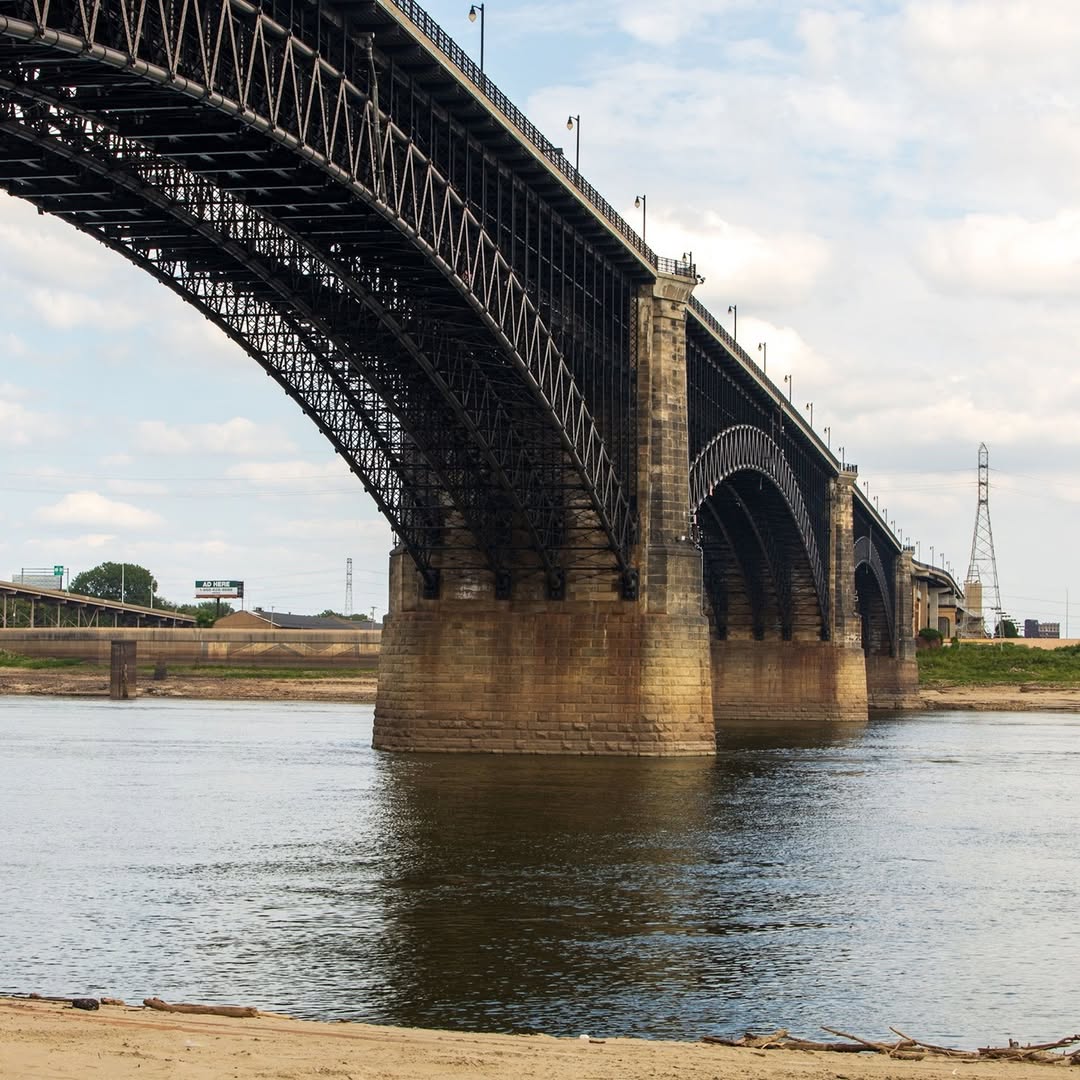
The walk along the St. Louis riverfront has a particular character that's different from standing in the park or paying for the tram. You're at water level, and the river is right there — brown and wide and moving fast — and the Arch rises above you at an angle that's almost impossible to photograph correctly because nothing in your frame of reference prepares you for its actual size.
The riverfront itself has been remade several times over the decades, and the current iteration — the Gateway Arch National Park, which officially became a national park unit in 2018 — integrates the grounds, the museum, and the river access more coherently than earlier versions. The cobblestone levee that slopes down to the water is original and old, the kind of infrastructure that launched a thousand nineteenth-century steamboats.
On a clear afternoon in fall, this is one of the better walks in any American city. The Arch catches the low light in a way that the direct-overhead summer sun doesn't produce. The river traffic — barges and occasional pleasure boats — gives the water scale. The city skyline fills in behind you as you walk north.
The Museum at the Gateway Arch is embedded in the hillside below the monument. The free exhibits on the Dred Scott case alone are worth an hour. Above ground, the stainless steel stays lit long after sunset, visible from across the city. The riverfront after dark, looking up, is the version of this place that I keep returning to.