
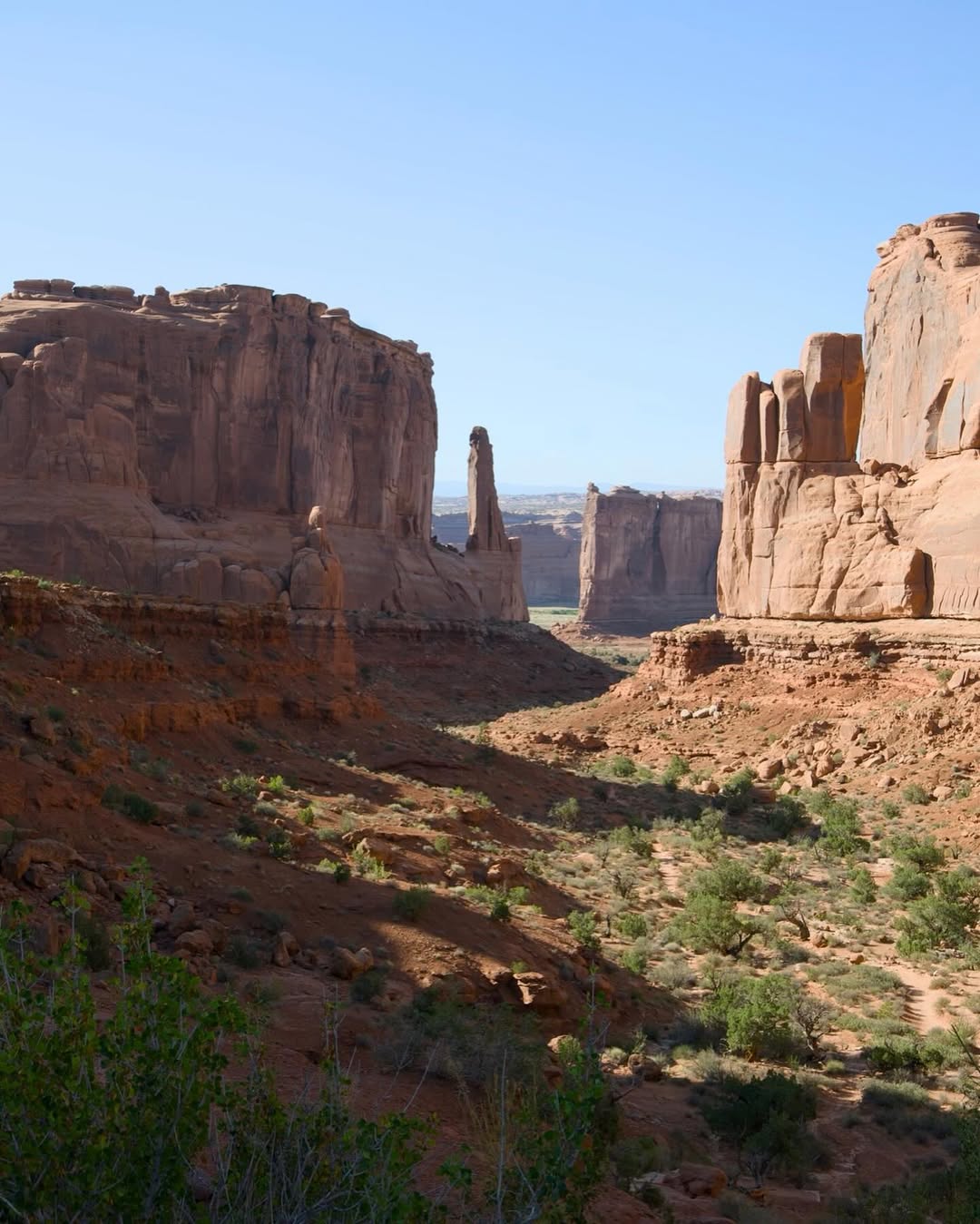
There's a particular light that hits the sandstone at Arches in the late afternoon, just before the sun drops behind the La Sal Mountains, and it turns everything the color of an ember. The rock goes from red to orange to something that doesn't have a good name, and the arches just hang there against whatever blue is left in the sky. I've seen a lot of parks. That light, at that hour, in that place — I'm not sure anything has topped it.
Arches sits just north of Moab in southeastern Utah, and the numbers alone are staggering: over 2,000 natural stone arches within about 76,000 acres of high desert. They range from small window-shapes you could walk under without bending to Landscape Arch, which stretches 306 feet across the sky and is among the longest natural arches in the world. The geology behind all of them is the same basic story: sandstone deposited over millions of years, then slowly dissolved from below by salt and groundwater, cracking and collapsing until what's left are the spans. It's destruction as art form.
Delicate Arch is the one on the Utah license plate, and the hike to reach it is 3 miles round trip with about 480 feet of elevation gain — straightforward but exposed, with no shade in the final stretch. Standing at the base of it is worth every step. The arch is bigger than it looks in photos, and the bowl it sits in, with the canyon dropping away on one side and the mountains behind it, is one of those views that makes you slightly uncomfortable with how beautiful it is. The Devils Garden area in the north of the park chains together eight arches in a single loop and is worth a half-day on its own.
Come early if you can. Parking at popular trailheads fills by mid-morning in peak season, and the heat in summer is serious — triple digits are common. Spring and fall are the sweet spots, with temperatures in the 60s and 70s and longer golden hours. The entrance fee is $35 per vehicle, good for seven days, and if you're hitting multiple Utah parks, the $55 Southeast Utah pass covers Arches and Canyonlands both. One last thing: stay on the trails. The dark biological soil crust between the rocks looks like nothing but is actually a living ecosystem that takes decades to recover from a single footstep.