
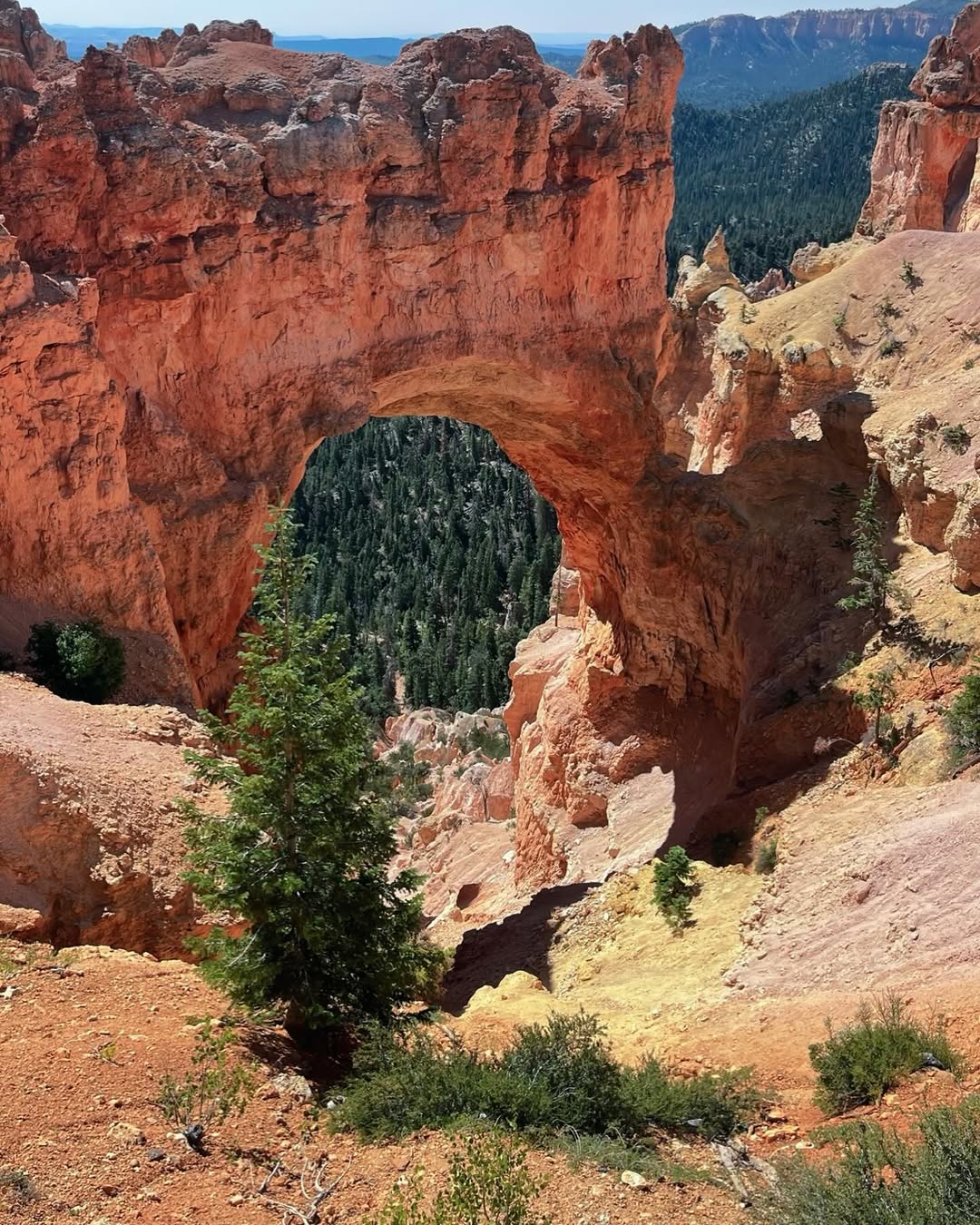
The first lookout at Bryce Canyon gave me a moment of genuine disorientation. I've seen a lot of desert geology, but nothing that looks like this. The amphitheater below the rim is full of hoodoos — thousands of tall, narrow rock spires ranging from the size of a person to 150 feet high — and they're packed so densely, with such variation in color and shape, that the whole thing reads as visual noise before your brain reassembles it into something coherent. Then you start picking out individual formations: Thor's Hammer, the Wall of Windows, the dark slot canyons between the spires. It takes a few minutes to land.
Bryce is in southern Utah, south of Capitol Reef and east of Zion, and it sits higher than both — the rim elevation ranges from 8,000 to over 9,000 feet. That altitude is the engine of what makes the hoodoos. Water seeps into cracks in the limestone during wet weather, freezes on cold nights (the park gets over 200 freeze-thaw cycles per year), expands, and slowly wedges the rock apart. Erosion does the carving, and what's left is what you see: the softer rock weathered away, the harder caps holding the spires up. It's frost-wedging at geological scale, and Bryce has more of it than anywhere else on Earth.
Walking down into the amphitheater on the Navajo Loop puts the hoodoos around you rather than below you, and that's the better perspective. The Wall Street section cuts through a narrow slot with walls close on both sides and small Douglas firs growing improbably out of the rock. The loop is only 1.3 miles but gains and loses 500 feet, and the elevation means you'll feel it more than you expect. The longer Queen's Garden route connects to the Navajo Loop and covers more terrain at a gentler grade.
Sunrise and sunset are genuinely different experiences here — the low light hits the iron oxide in the rock and turns the reds redder, and the shadows deepen the contrast between the spires and the snow-white limestone between them. If you can be at the rim at first light, do it. Bring a layer even in summer. The elevation at 9,000 feet makes mornings cold in a way that catches people off-guard.