
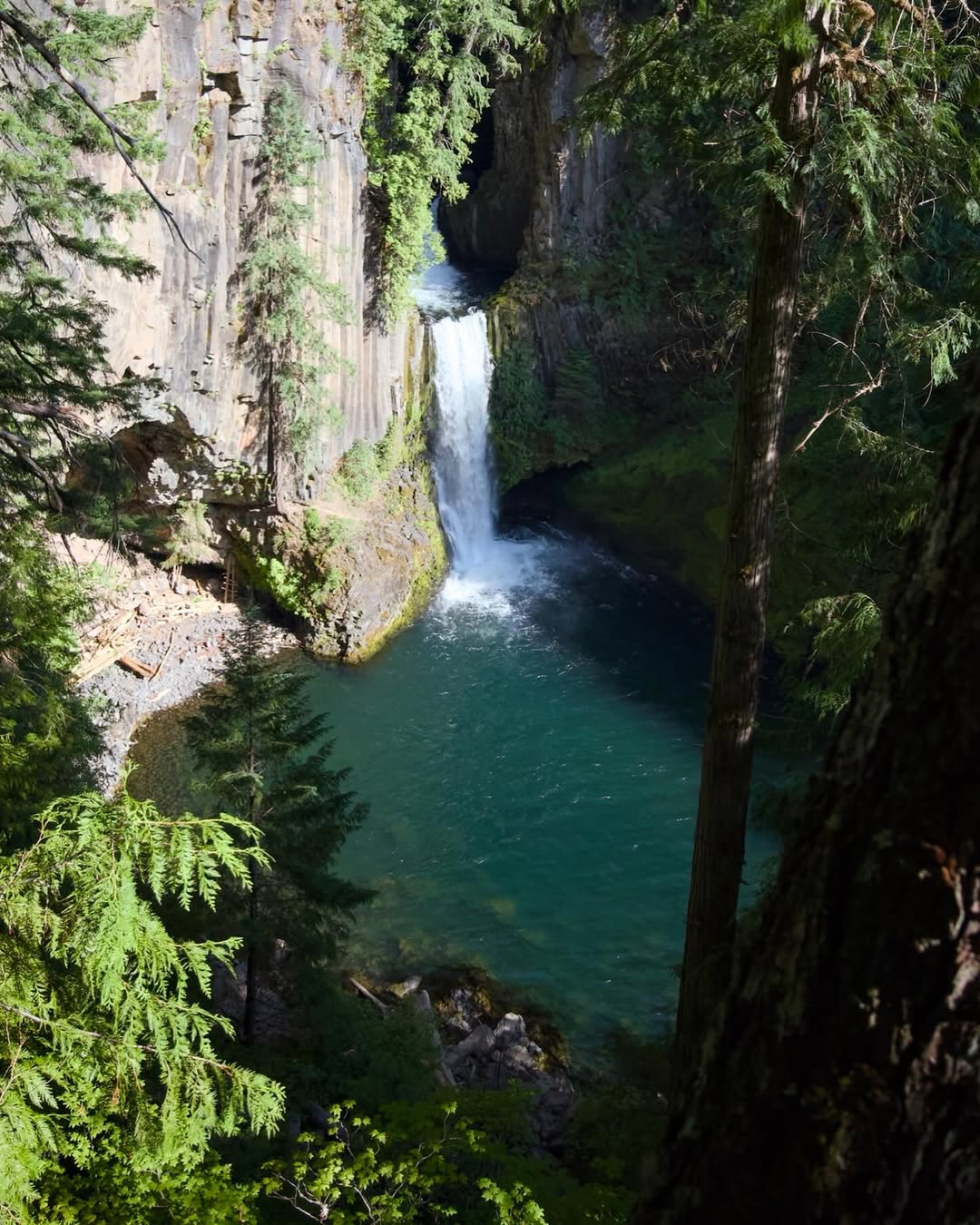
Toketee Falls earns its reputation. The North Umpqua River drops 28 feet into a pool at the base of a columnar basalt alcove, then falls another 85 feet into the main pool below — 113 feet total, framed by hexagonal basalt columns that look cut by machine rather than formed by cooling lava. The effect is architectural in a way that natural formations rarely achieve.
The trail from the trailhead parking is 0.4 miles with nearly 200 steps, ending at a wooden viewing platform built into the cliff face above the main pool. There's a tree growing through the middle of the boardwalk, which the platform was designed around. From the platform you see the falls straight on: the basalt columns on both sides, the two-tiered drop, the blue-green pool below catching mist.
Toketee Falls is on the North Umpqua River in Umpqua National Forest, accessible off Highway 138 at milepost 58.6. The name is a Chinook jargon word meaning "graceful" or "pretty," which is understated but accurate. The road in is paved. The area around the trailhead has a popular camping area and access to other waterfall trails in the Umpqua watershed.
Waterfall Creek, Lemolo Falls, Watson Falls — the Umpqua corridor has more exceptional waterfalls per mile than almost anywhere in Oregon outside the Gorge. Toketee is the anchor of that corridor and the most photographed for good reason. The columnar basalt framing is unique. The viewing platform is the right design choice. The falls deliver what the photographs promise.