
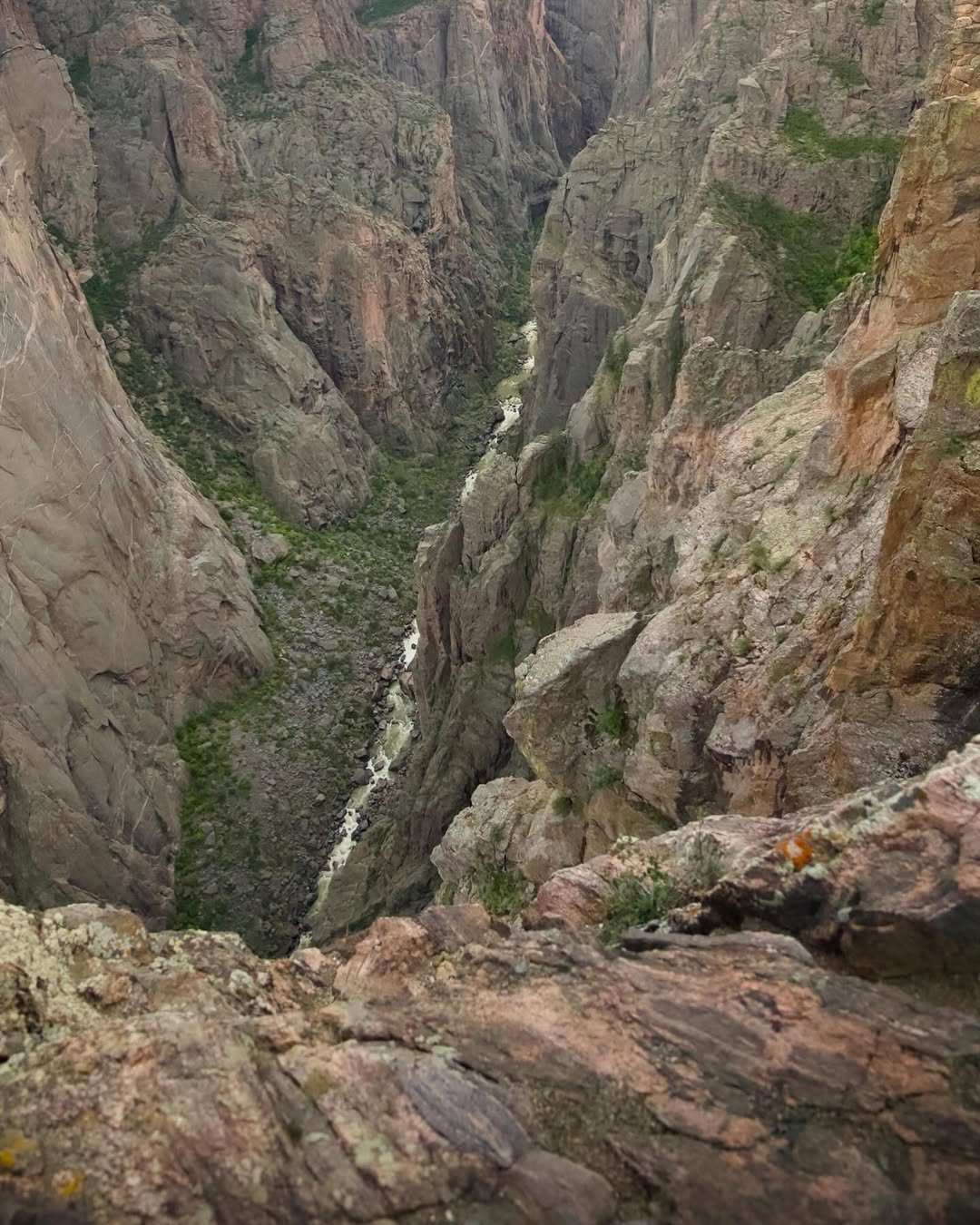
Black Canyon of the Gunnison is not a canyon you can see at a glance. The walls are 2,000 feet deep in places and so narrow — the narrowest point is 40 feet across at the river — that the sun reaches the bottom for only minutes each day. The rock at the base is nearly 2 billion years old, some of the most ancient exposed rock in North America. Standing at the rim looking down into that darkness, you understand why the name is literal.
The park was established in 1999 and protects 30,046 acres in western Colorado. The canyon was formed by the Gunnison River cutting through Precambrian metamorphic rock — gneiss and schist — at an average drop of 34 feet per mile through the canyon, making it one of the steepest mountain descents in North America. At the most precipitous section, the river drops 240 feet per mile.
The South Rim Drive gives access to twelve overlooks, each offering a different angle on the canyon. The Painted Wall — the highest cliff face in Colorado at 2,250 feet — is visible from several of them. The rock face is streaked with ribbons of pink pegmatite that formed when molten rock intruded into the older gneiss, creating the painted effect that gives the wall its name.
Inner canyon routes exist for experienced climbers and hikers but require permits and serious route-finding. The rim trails are more accessible and sufficient for most visits. Black Canyon receives fewer visitors than any of its Colorado national park neighbors, which means the overlooks are often quiet. The canyon deserves more attention than it gets.