
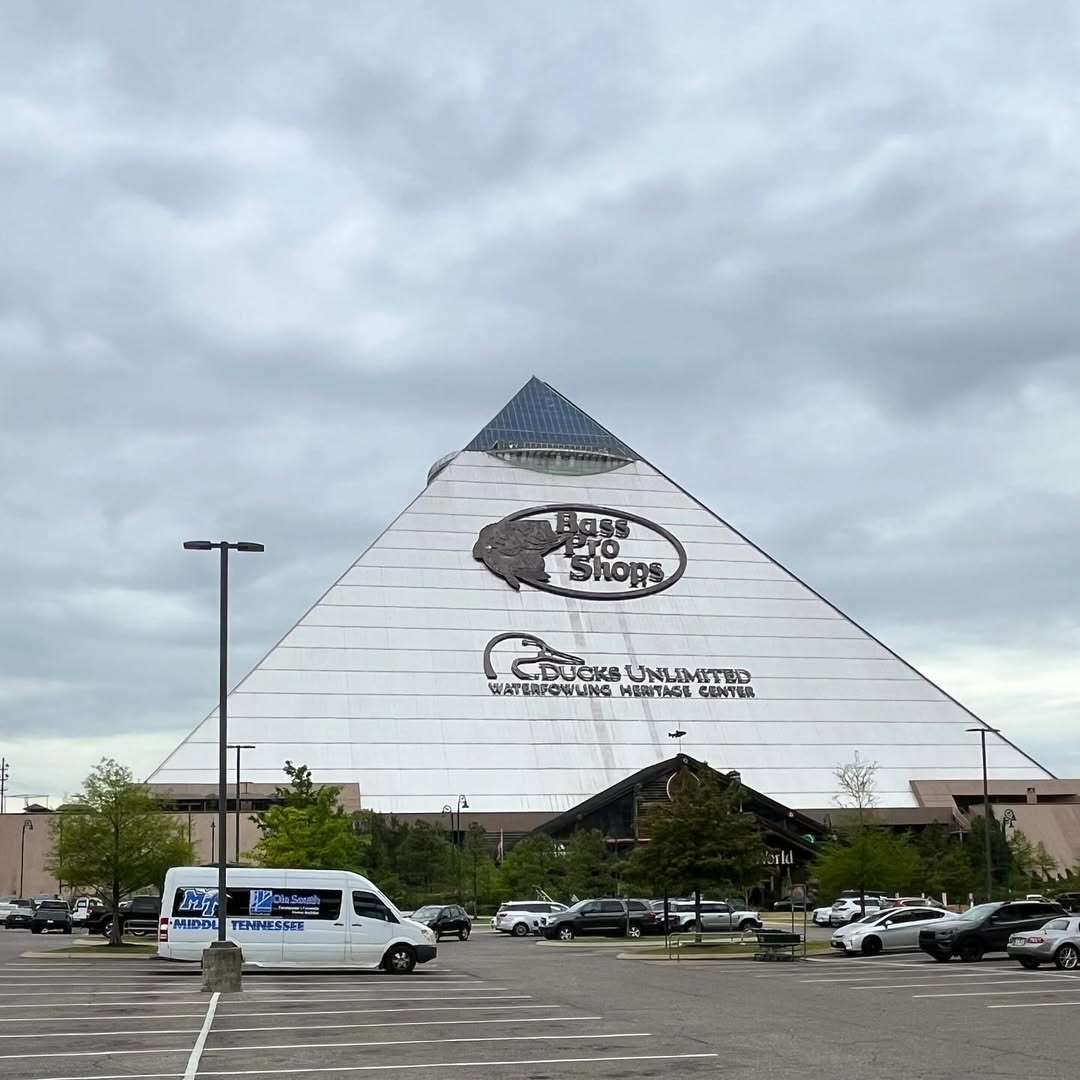
The Memphis Pyramid opened in 1991 as a 20,142-seat arena on the banks of the Mississippi River. It hosted NBA games, concerts, and NCAA tournaments for over a decade before falling out of regular use in 2007. For years it sat largely empty, a 321-foot steel pyramid dominating the downtown skyline with nowhere useful to be.
In 2015 it reopened as Bass Pro Shops at the Pyramid, which is either the most inspired adaptive reuse project in American architectural history or the most absurd, and I've decided the answer is both. Inside the third-largest pyramid in the world is a 535,000-square-foot fishing and outdoor retail store, an indoor cypress swamp containing 600,000 gallons of water, live alligators, waterfalls, a 100-room hotel built inside the structure, a bowling alley, and a restaurant at the apex accessed by the tallest freestanding elevator in the country.
I walked in expecting kitsch and found something more interesting: an entire outdoor world compressed into a climate-controlled steel pyramid overlooking the Mississippi. The scale of the space is surreal. The atrium rises 30-plus stories above you. The cypress trees in the swamp are full-size. The fish in the aquariums are real.
The elevator to the Lookout observation deck at the apex is a four-story glass-enclosed ride with views of the river and downtown Memphis. On a clear day you can see the bridges crossing to Arkansas. The whole visit costs money but earns it. Memphis deserves its pyramid.