
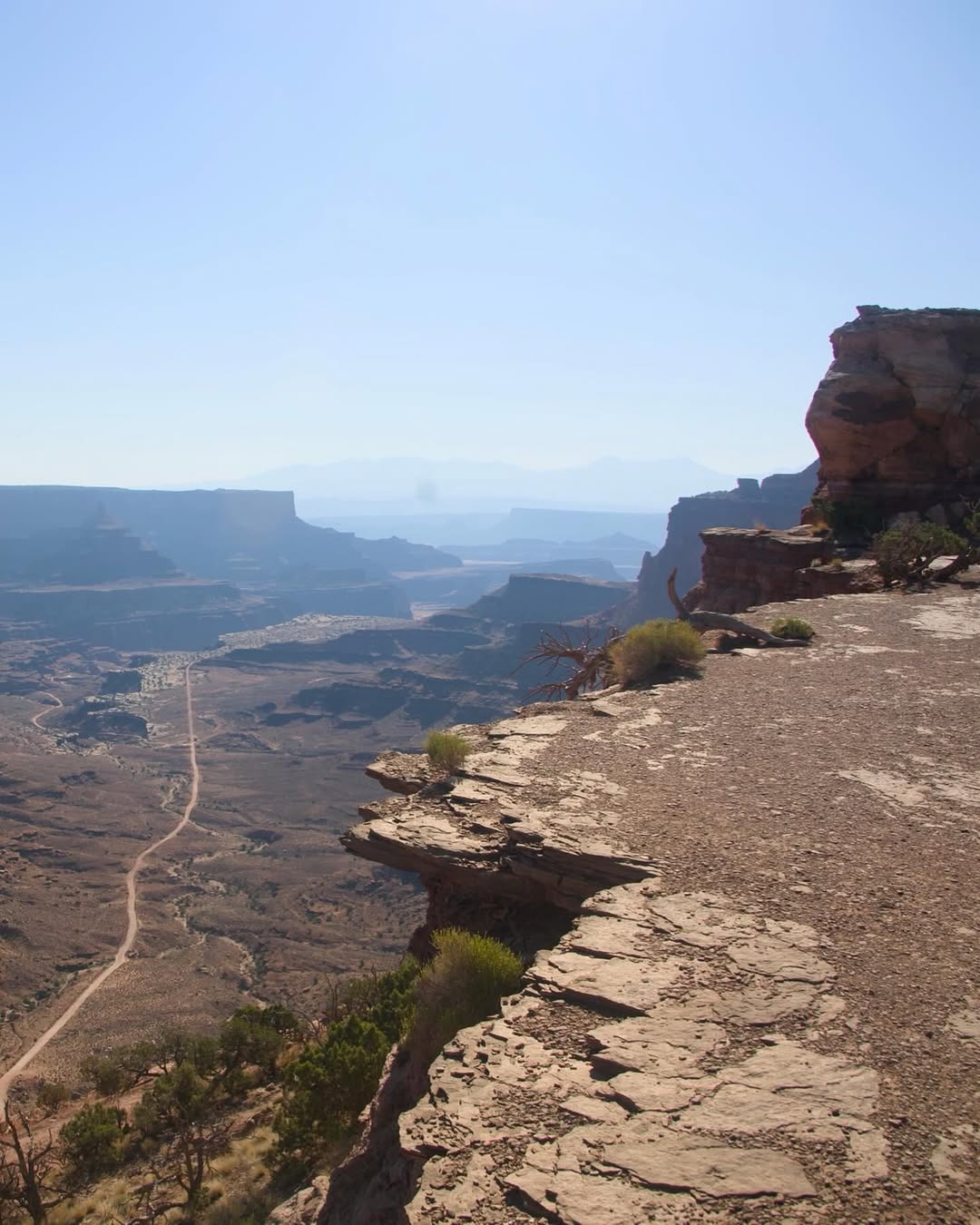
Canyonlands is the one Utah park that doesn't reward a quick visit. Zion is right there as you drive in; Bryce reveals itself from the rim. Canyonlands requires you to choose: Island in the Sky, the Needles, or the Maze — and each is a separate destination, separated by hours of driving and hundreds of feet of elevation change. There's no driving from one to another in an afternoon. The park is enormous, and it shows.
Island in the Sky is the most accessible district — a flat mesa perched 1,000 feet above the surrounding canyons, with viewpoints that drop away in all directions into a landscape that looks like it should have water at the bottom but doesn't. The Colorado and Green rivers join somewhere below, invisible until you get to specific overlooks. Mesa Arch is the famous shot, a natural arch perched on the rim edge that frames the canyon below through its opening. I got there before sunrise, which meant headlamps and waiting in the cold, and then the arch started to glow as the sun came up from behind and lit the underside of the stone. Worth every minute of the cold.
The scale at Island in the Sky is hard to translate. You're looking at 100 miles of canyon country in every direction — mesas, buttes, grabens, and the deep cuts of the rivers. The White Rim Road snakes 100 miles around the mesa far below, accessible only by high-clearance 4WD or mountain bike. From up top, the road is barely visible.
What makes Canyonlands different from Arches, a short drive away, is the absence of the iconic single feature that draws the crowds. There's no Delicate Arch equivalent here — just immensity. The park rewards the people who slow down and sit with that immensity for a while.
September and October are the right months — desert heat has broken, the crowds have thinned, and the light has that low-angle quality that makes red rock look like it's on fire. Come early, bring enough water, and leave the expectations about what a national park visit should look like at the gate.