
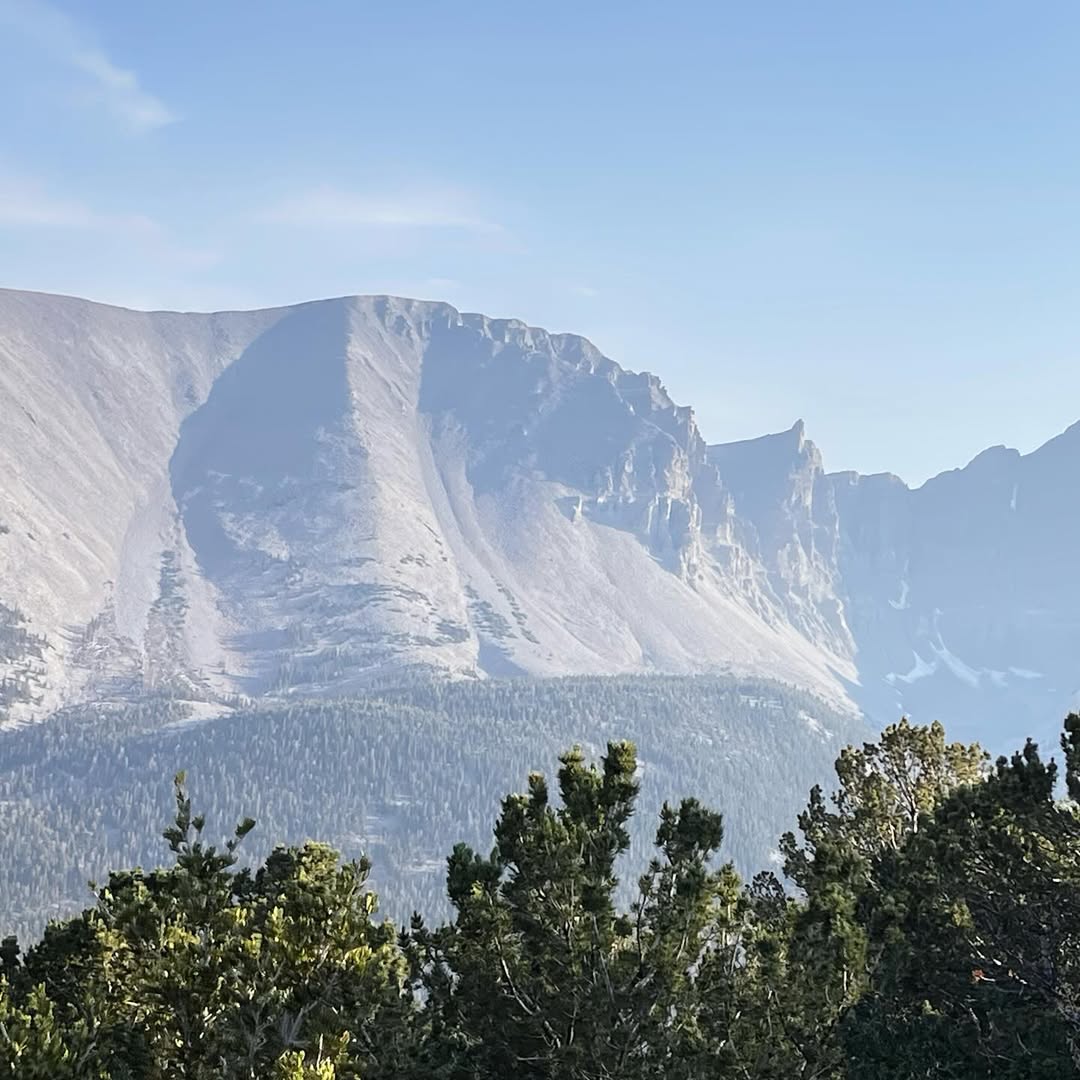
Great Basin National Park sits in the desert of eastern Nevada, 290 miles north of Las Vegas, and its remoteness is part of what makes it remarkable. There are no major cities nearby. The drive in crosses basin after basin — that's the geology, alternating mountain ranges and flat valleys like corrugations across the Great Basin — and by the time the Snake Range comes into view you feel appropriately far from everywhere.
The bristlecone pines near the Wheeler Peak grove are the thing that stopped me cold. These trees can survive for more than 5,000 years. The oldest known individual in the park was at least 5,000 years old when it was cut down in 1964 — a story still told with appropriate regret by everyone who knows it. The surviving trees have a particular character: twisted, dense-grained, stripped by wind to bare wood on the exposed sides, still alive on the sheltered ones.
Lehman Caves, at the base of the mountain, hold more shield formations — rare cave growths that form parallel to the floor or walls — than any other known cave. Over 300 of them, along with the usual stalactites and stalagmites. The tours run daily and are worth taking; the cave system is about two miles long and the formations are genuine.
Wheeler Peak rises to 13,063 feet above the park and has a glacier — one of the southernmost in the country — on its north face. The Summit Trail is a strenuous 8.6-mile round trip. Great Basin gets fewer than 100,000 visitors a year, which for a national park this good is almost inexplicable. Go.