
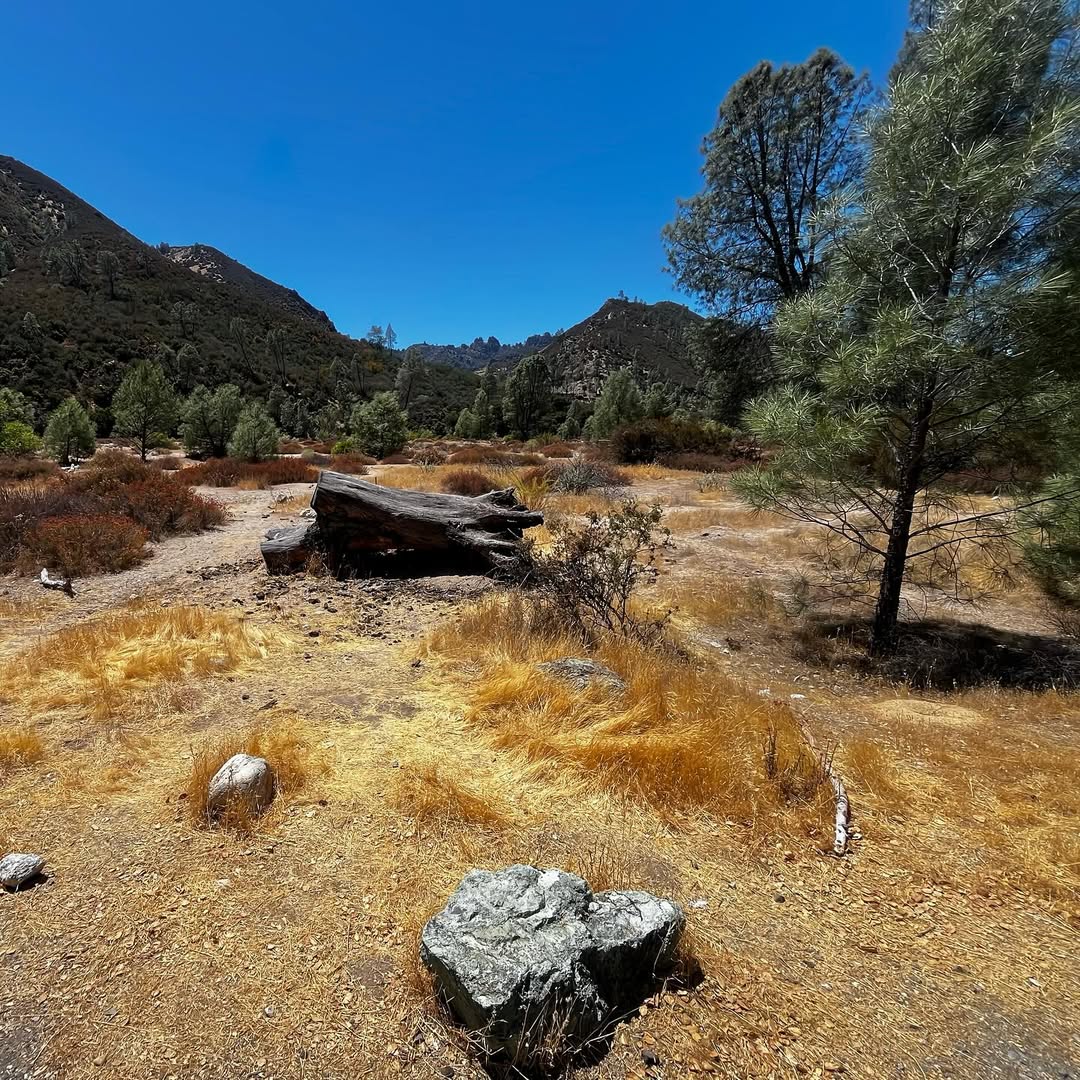
Pinnacles National Park is the result of a volcanic eruption that happened 23 million years ago and 200 miles to the southeast, then traveled to its current location via tectonic movement along the San Andreas Fault. The volcanic rock formations — the actual pinnacles — are the remnants of that displaced volcano, carried here by geological forces operating on timescales that make everything else feel brief.
The park is California's smallest and least visited national park, which in practice means it's possible to find trails without crowds. The High Peaks Trail through the spires gives you the best sense of what the volcanic breccia formations look like: jagged, wind-worn, improbable. Rock climbers come specifically for this rock — it's softer than granite and rewards different techniques.
The condors are the other reason to come. Pinnacles has been an official California Condor recovery site since 2003, and park biologists manage more than two dozen birds identified by wing tags. These birds were down to 22 individuals in 1987 before captive breeding programs reversed the decline. Standing at the High Peaks overlook watching condors ride thermals overhead — birds with nine-foot wingspans that nearly went extinct in our lifetimes — is one of the more moving wildlife experiences I've had.
The talus caves are a unique feature: passageways formed by massive boulders jamming together in canyons, dark and narrow and requiring a headlamp in the deeper sections. The park has two cave systems accessible to visitors. The combination of spires, caves, condors, and climbing makes Pinnacles one of the most varied parks in the country per square mile.