
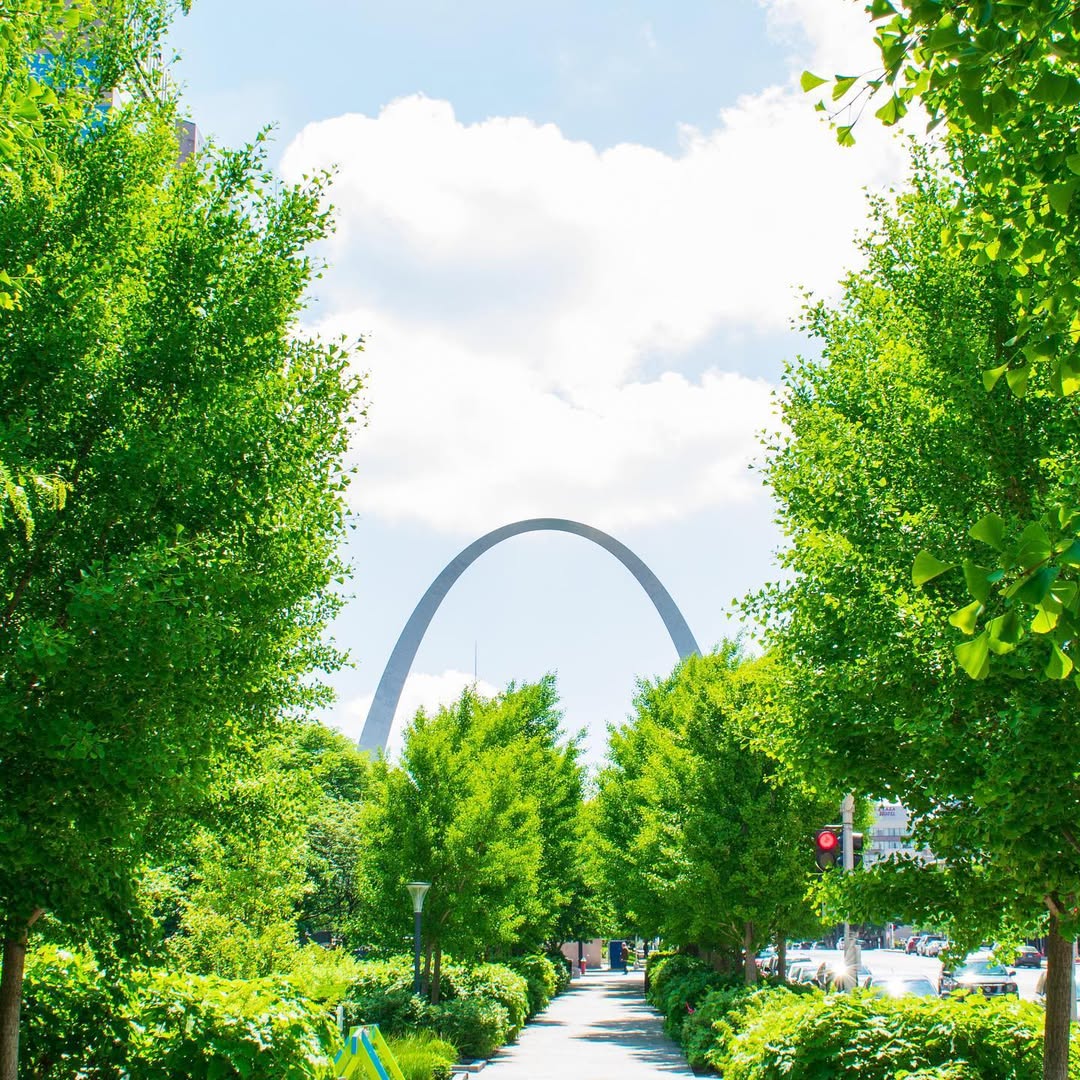
There's a version of downtown St. Louis that most people know from a distance — the Arch glinting silver above the river, Busch Stadium on a game night, the general outline of a Midwestern city doing its best. But the version I fell into that May afternoon was different. More textured.
I was walking without a destination, which is how I ended up on the stretch of Locust Street lined with buildings that carry a hundred years of architectural decisions, some great, some puzzling, most of them interesting. The Wainwright Building, designed by Louis Sullivan in 1891, is genuinely one of the finest things in any American city. The Old Courthouse across from the Arch was where Dred and Harriet Scott sued for their freedom. History in St. Louis keeps surfacing underfoot like that if you're paying attention.
The riverfront itself is the hinge the city pivots on. The Gateway Mall stretches west from the Arch in a long green corridor, and on a clear day it fills with people who seem happy just to be outside. The city's relationship with the Mississippi is complicated and always has been — floods, commerce, migration, all of it running through here — but standing on the riverfront you feel some of that weight and grandeur both at once.
The blocks north and south of Market Street have pockets of genuine life: small restaurants, a few bars worth finding, the City Garden sculpture park sitting in the middle of everything. Downtown St. Louis asks you to walk it. A car doesn't let you see it right.