
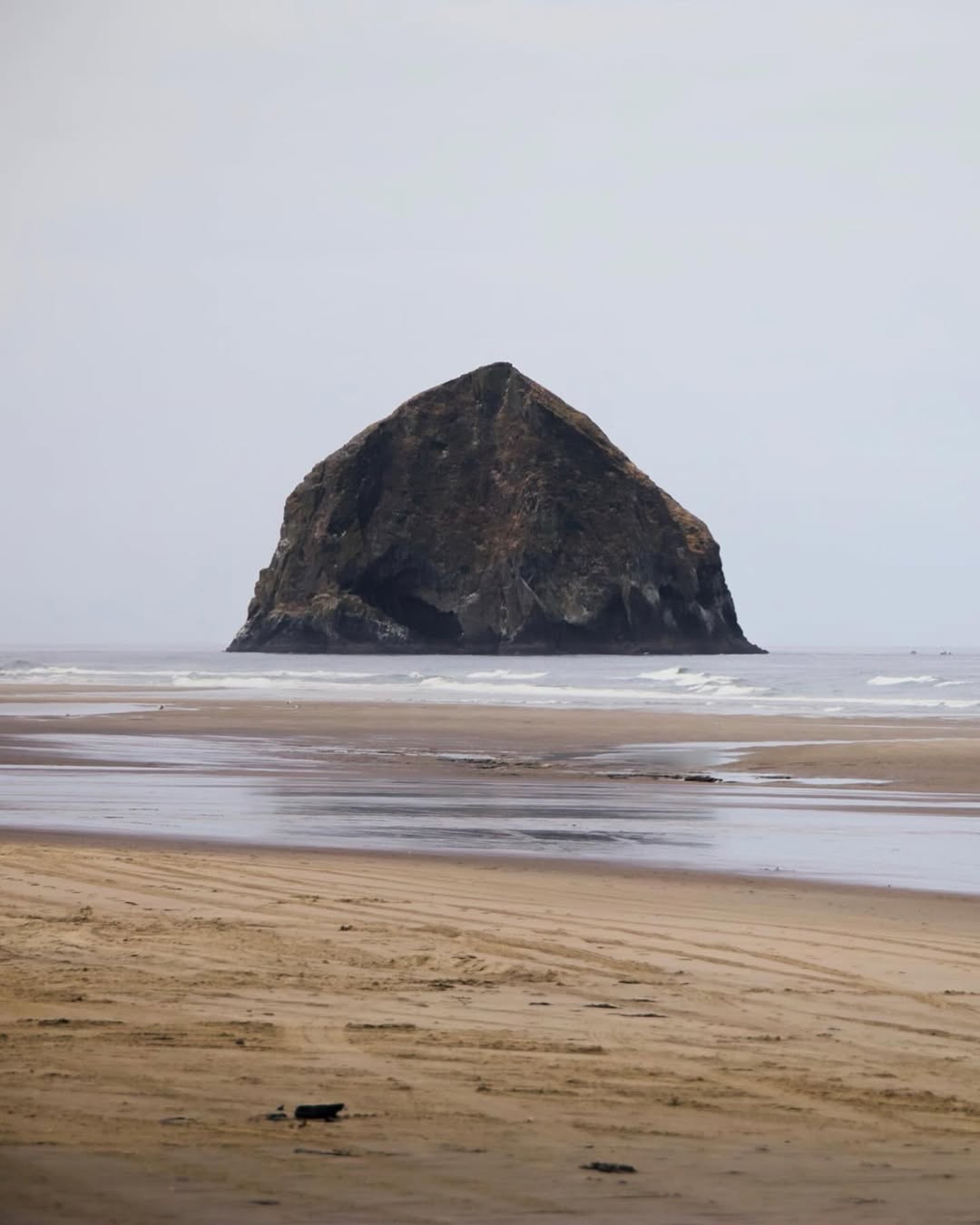
Haystack Rock rises 235 feet from the edge of Cannon Beach, a basalt sea stack formed by lava flows 17 million years ago that have been shaped by ocean forces ever since. It is the third-largest intertidal monolith in the world and the most photographed landmark on the Oregon Coast. The photographs, for once, are not an exaggeration.
At low tide you can walk up to the base of Haystack Rock and examine the tide pools that ring its intertidal zone. Ochre sea stars, giant green anemones, purple sea urchins, hermit crabs, chitons, nudibranchs — the diversity in those pools is exceptional. The Haystack Rock Awareness Program, operating mid-February through late October, posts interpreters at the rock during low tides to explain what you're looking at and enforce the protective measures: no touching, no removing anything from within 300 yards.
The tufted puffins are the seasonal draw that brings people from further away. They arrive in spring and nest in the grassy slopes on the north face of the rock, and you can watch them from the beach below with binoculars. Squat black birds with orange bills and yellow facial tufts, they're recognizable and genuinely charismatic. The season runs roughly late spring to mid-summer.
Cannon Beach is also one of the better beach towns on the Oregon Coast — genuine cafes and galleries, no chain sprawl, the kind of place that rewards a day off the highway.